At the World Water-Tech Summit 2026, experts explored water markets, innovation adoption, and real-time data shaping the future of water sector resilience.
The World Water Tech Innovation Summit 2026 brought together utilities, policymakers, technologists, and start-ups to tackle the sector’s most pressing challenges. Two days of discussion revealed both encouraging progress and persistent gaps between ambition and action.
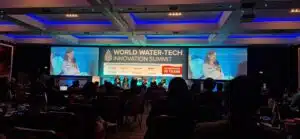
One of the most notable discussions centred on the evolution of water markets. For years, the concept has largely lived in policy frameworks and academic debate. Now, markets are beginning to move into real-world operations.
But with that transition comes a series of critical questions:
- Who governs these markets?
- How do they ensure fairness and transparency?
- And perhaps most importantly, how do they deliver resilience and public benefit, not just financial returns for participants and intermediaries?
The conversation is clearly shifting. The challenge now is ensuring these mechanisms strengthen water system resilience rather than simply creating another financial instrument.
While no consensus emerged, there was growing recognition that regulatory frameworks must evolve faster than market structures themselves
Utilities know transformation is needed
Another stark statistic shared during the summit: only 11% of water executives believe their organisations are truly future-ready.
That lack of confidence says a lot about the scale of transformation the sector faces. It is no longer just about adopting new technologies. Utilities are recognising the need for:
- Operational excellence
- Cultural change
- Stronger links between strategy and execution
Technology may be the enabler, but transformation ultimately happens through people, processes, and governance.
Real-time intelligence is becoming operational
Encouragingly, there are examples of utilities moving from concept to deployment.
For example, Anglian Water highlighted how integrating geospatial technology with live operational data is helping reduce pollution risks and manage flooding more effectively while improving cost efficiency.
This is where the promise of digital transformation becomes tangible. Smart sewer systems, digital twins, and dynamic control are evolving beyond monitoring dashboards into active performance management tools. In other words, utilities are starting to use data to operate networks in real time rather than simply analysing problems after they occur.
Innovation is thriving – but not always surprising
The summit showcased a broad mix of start-ups and scale-ups presenting solutions across sensing, real-time monitoring, environmental technologies, and advanced data analytics.
Companies such as ACWA robotics, REDstack, Waltero, and Wastewater Fuels demonstrated the growing maturity of the water innovation ecosystem.
However, many of these solutions are no longer unknown quantities. They are already visible to innovation teams and investment networks across the sector. The challenge is less about identifying new technologies, and more about accelerating their adoption at scale.
Collaboration: widely discussed, rarely delivered
Roundtable discussions covered the sector’s most pressing challenges: PFAS contamination, combined sewer overflows, non-revenue water, climate resilience, and stormwater management.
The consensus was clear, progress requires greater data confidence, transparency, and cross-sector collaboration.
Yet this remains one of the sector’s enduring paradoxes. Collaboration is universally endorsed in discussion, but far less common in practice. Moving from conversation to coordinated action remains a major hurdle
Start-up pitching: insights from the floor
Dr. Jo Burgess had the opportunity to facilitate the start-up pitching session, where companies delivered rapid three-minute presentation of their technologies.
Interestingly, the solution that generated the most interest from utilities such as Affinity Water and Northumbrian Water was ANB Sensors, demonstrating how real-time water chemistry monitoring could transform network insights.
Yet this highlighted another reality of innovation in the sector: technologies that resonate in one forum do not always gain traction in another. The pathway from promising concept to sector adoption is rarely straightforward.
The real test ahead
Events like the World Water-Tech Innovation Summit provide valuable opportunities to exchange ideas and showcase emerging solutions. But the real measure of progress will come from what happens after the event.
For initiatives like Isle’s Technology Approval Group and the Trial Reservoirs Initiative, these discussions reinforce that distributed, nature-based solutions need the same rigour in data, governance, and market mechanisms that we’re now demanding of traditional infrastructure.
The water sector does not lack technology, ideas, or discussion. What it needs now is execution at scale, turning innovation conversations into operational change.
Because ultimately, resilience will not come from the number of panels we attend or technologies we showcase. It will come from the systems we actually deploy.